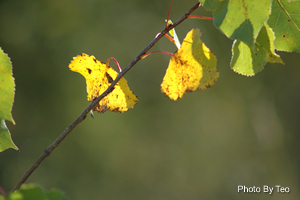
Cottonwood, or Populus deltoides. The Lakota know them as canyáh’u, meaning “peel off wood,” and the Omaha as maa-zho. It’s in the Salicaceae family of plants or willow family and it is closely related to poplars and willows.
Cottonwood is a tree that can grow up to ninety feet tall.
These trees lose their triangle shaped serrated leaves in the winter. The bark is grey and has deep furrows. They make flowers are known as catkins that burst into white fluffy seed, where the plant draws its name from. It is often found in close proximity to water, as are willows. It is usually found in the wild or has been planted by homesteaders years earlier to provide shade.
Using Cottonwood
The sticky buds of cottonwood can be used to make salves and oils. The twigs can also be used for both oils and tinctures. Traditionally you will hear reference to using the bark but it is an absolute no-no to strip a tree for its bark unless it has already been downed.
The best way to harvest cottonwood is after a good spring storm or a tornado throws a few branches down from the higher limbs. Strip the leaves off and chop the twigs up to make tincture or tea.
Historically
Many tribes have used cottonwood as a textile and medicine throughout history. Medicinally it is known for its pain relieving effects. The willow family in general is known for having the constituent salicin which has been synthesised and used on the market as aspirin. Willow bark is a popular market herb for headaches and pain relief but cottonwood has been said to be more consistent in its effects pharmacologically.
Modern Use
The plant can be used topically and internally. It is best used as an oil or tincture. I use cottonwood in my aches and pains balm. I also add it to many formulas for pain relief. It acts specifically not just as a sedative but also as an anti-inflammatory.
Thanks for joining me on this walk through the wild side and remember herbal medicine is a powerful healing modality. Please consult a trained clinical herbalist and or wildcrafter to help you make the best and safest and most sustainable choices when harvesting herbs and using them medicinally.
The above text is a transcript of the embedded video.